 (208) 991-3502
 Meridian, ID






 January 14, 2026
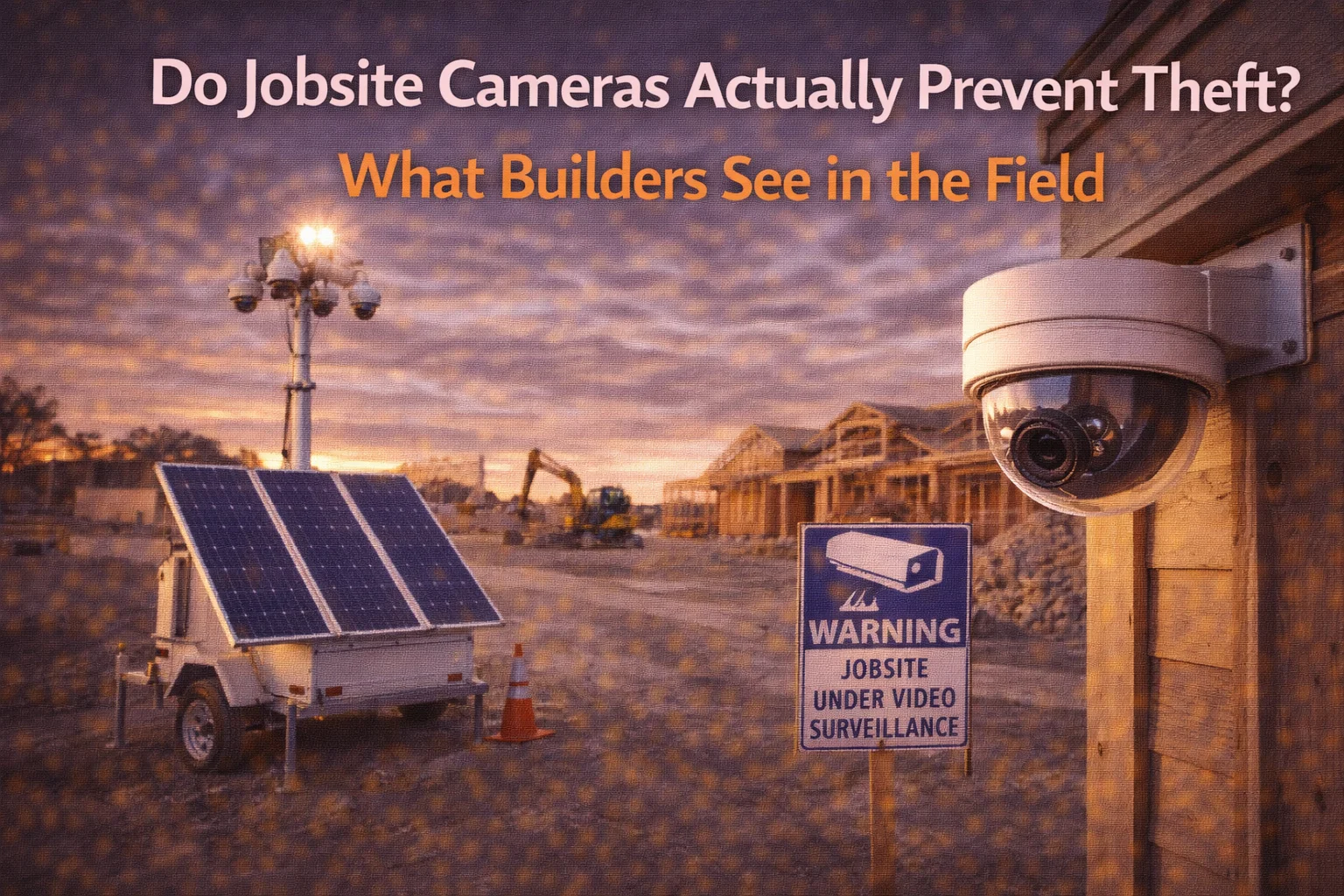
Jobsite cameras are often installed after theft occurs—but do they actually prevent it? This article looks at what builders see in the field and how cameras truly impact jobsite security.
When theft happens on a construction site, cameras are often the first solution considered. Builders want visibility, documentation, and accountability. But a common—and fair—question follows quickly:
Do jobsite cameras actually prevent theft, or do they just record it?
For builders and contractors across the Treasure Valley, the answer isn’t theoretical. It’s something they see play out on real jobsites, with real schedules and real financial consequences.
The short answer is yes—jobsite cameras do prevent theft—but only when they’re used the right way.
This article explains how cameras impact theft in the real world, what builders observe on active sites, and why some camera setups succeed while others quietly fail.
Most Jobsite Theft Is Opportunistic, Not Planned
One of the most important things builders learn over time is that most jobsite theft is not sophisticated.
It’s opportunistic.
Materials are left exposed. Equipment is staged near access points. Sites are quiet overnight. Someone notices an opportunity and takes advantage of it.
In these situations, perceived risk matters more than anything else. If a site looks unmonitored, poorly lit, or ignored, it becomes an easy target. If it looks actively monitored, most opportunistic theft simply doesn’t happen.
This is where cameras begin to make a difference.
Visibility Is the First Line of Defense
Builders consistently report that visible cameras reduce incidents, even before systems are actively monitored.
When cameras are:
Clearly visible
Placed near access points
Supported by signage
Positioned with intention
they send a clear message: this site is being watched.
That message alone is often enough to push would-be thieves toward easier targets. In many cases, theft stops entirely once cameras are installed—not because someone was caught, but because the opportunity disappeared.
Why Some Camera Systems Don’t Prevent Theft
Not all camera systems are effective, and this is where skepticism comes from.
Builders who say “cameras didn’t help” often experienced one or more of the following:
Cameras were hidden or hard to notice
Coverage missed actual access points
Lighting was insufficient for night visibility
Cameras weren’t reliable or stayed offline
Footage was reviewed too late to matter
In these cases, cameras existed—but they didn’t change behavior. And behavior change is the real goal.
A camera that no one sees and no one trusts does little to prevent theft.
Deterrence Works Best When Cameras Are Part of a System
In the field, builders see the strongest results when cameras are not deployed alone.
Cameras are far more effective when paired with:
Strategic lighting
Clear signage
Motion-triggered alerts
Centralized visibility
This combination increases perceived risk dramatically. Someone approaching the site doesn’t just see a camera—they experience an environment that feels actively monitored.
This layered approach is why many builders move beyond basic camera installs and explore broader jobsite strategies through providers like
👉 https://treasurevalleysolutions.com/services/
Real-World Builder Observations
Across multiple projects, builders tend to observe similar patterns:
Sites without cameras experience repeated minor theft
Theft often stops immediately after cameras are installed
Incidents shift to less protected areas nearby
Losses decrease even without active monitoring
Perhaps most telling: builders rarely remove cameras once installed. Even when no theft occurs afterward, the peace of mind alone is worth the investment.
Cameras vs Recovery: Prevention Is the Real Value
It’s important to be honest: cameras don’t guarantee recovery of stolen materials.
What they do is reduce the likelihood of theft happening at all.
From a builder’s perspective, prevention is far more valuable than documentation. Avoiding delays, reorder costs, insurance claims, and crew downtime matters more than having footage after a loss.
This is why builders who experience theft once often become proactive about camera placement on future projects.
Why Placement and Planning Matter So Much
The effectiveness of jobsite cameras is rarely about the camera itself.
It’s about:
Where it’s placed
What it can see
Whether it’s visible
Whether it’s supported by lighting
Whether it’s trusted to stay online
Poor placement leads to poor results. Thoughtful planning turns even modest camera setups into powerful deterrents.
This is why professional planning consistently outperforms DIY or rushed installations on active jobsites.
Frequently Asked Questions
Do jobsite cameras stop all theft?
No, but they significantly reduce opportunistic theft, which makes up the majority of incidents.
Are cameras better than alarms?
They serve different roles. Cameras deter and document; alarms detect and alert. Together, they work best.
Does signage really help?
Yes. Signs reinforce the perception that monitoring is active and intentional.
Do cameras work during winter and low light?
Yes, when paired with proper lighting and placed correctly.
Is professional setup worth it?
Yes. Most ineffective camera deployments fail due to poor planning, not bad equipment.
What Builders Learn Over Time
Builders who use jobsite cameras consistently come to the same conclusion:
cameras work when they’re designed to influence behavior, not just collect footage.
For Treasure Valley contractors, the value of jobsite cameras isn’t found in dramatic recoveries—it’s found in quiet jobsites, protected materials, and projects that stay on schedule.
When cameras are visible, reliable, and thoughtfully placed, theft often stops before it starts—and that’s exactly the outcome builders want.